Wednesday, December 30, 2015

Some local IT news

Some quick items before year-end.

Wi-fi for schools
According to Demerara Waves:
"The eGovernment Unit  has begun rolling out Wi- Fi networks in schools, while Hinterland and remote areas are expected to benefit from internet access by the end of the first quarter of 2016..."
This will be a challenging project. The article indicates that there is currently a pilot project at one school. Access will be restricted using a whitelist.

Open source
This important issue got some coverage recently.
Hacking vs open source
Open source in public service

Samsung smart school pilot project
Samsung and Starr Computers along with the Ministry of Education worked to set this up. This system has been piloted in many countries but I could not quickly find an independent evaluation. Will be interesting to see what happens over the next year or so. May be I can follow this story.
The World Is Not Falling Apart

I posted an item on this topic one year ago and here another from the same source!
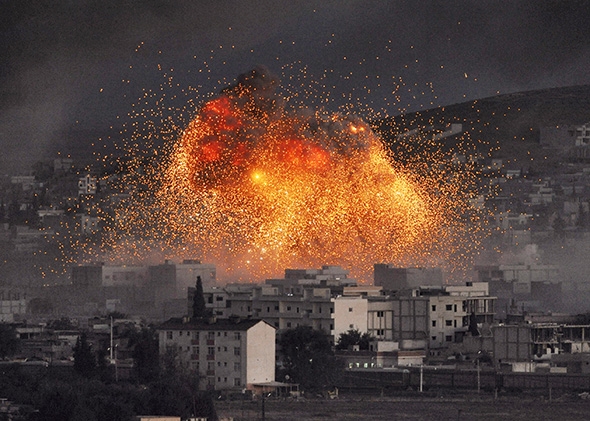
An article from Slate pointing out the upward trends.
"The only sound way to appraise the state of the world is to count. How many violent acts has the world seen compared with the number of opportunities? And is that number going up or down? As Bill Clinton likes to say, “Follow the trend lines, not the headlines.” We will see that the trend lines are more encouraging than a news junkie would guess."
Not that there are not downward trends but there are upward trends too!

Monday, November 30, 2015

Climate Resilience Strategy and Action Plan (CRSAP) - draft released

The Office of Climate Change has released the draft CRSAP for Guyana for public review until 18th December. This plan is important and is intended to guide action (and funding) for years to come. This document of nearly 300 pages is fairly technical and cannot be summarised easily so here is a part of the executive summary:
"Climate models project that temperatures will continue to increase and that sea levels and the height of storm surges will rise. Projections also indicate that average annual precipitation will decrease and that the proportion of heavy rainfall events will increase. These in turn are expected to exacerbate adverse social, economic and environmental impacts, and act additional stress factors on systems with vulnerabilities derived from non-climate drivers."
"Specifically, the CRSAP provides:
  • A roadmap for the next five years.
  • Project Concept Notes for four priority climate resilience programmes which can now be
  • developed into full proposals and submitted for funding.
  • A summary of the most significant climate risks and required resilience actions across 15
  • key sectors. These actions are proposed as the basis for the design of new interventions and
  • a pipeline of projects which can be presented for funding and implemented within five years
  • and beyond.
  • A set of capacity building actions that enhance Guyana’s capacity for national adaptation
  • planning and becoming climate resilient to be undertaken within the next five years.
  • A strategy to finance the CRSAP inclusive of the PCNs."

Friday, October 30, 2015

The role of technology in a climate solution

An interesting item in Bulletin of the Atomic Scientists advocates large reductions in energy use:
"For civilization to continue sustainably, human beings must shift from fossil fuels to solar energy—despite the technical problems. And investments are needed in biotic and other low-energy innovations. But in the end, global energy consumption must be reduced by something on the order of 60 percent. This will require a number of profound non-technological changes. Energy equity must be established among the world's nations—people in wealthy countries should not, as they do today, use hundreds of times as much energy as people in the poorest countries."

Tuesday, September 29, 2015

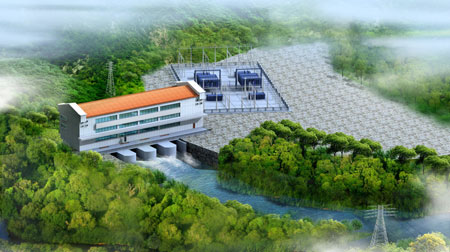
Hydro-power for Guyana?

A panel discussion on the topic was recently held, sponsored by the EU and occasioned by the visit of a delegation in regarding preparations for the 2015 Paris Climate Conference, COP21.

Reports were seen at Demerara Waves and Guyana Times.

The experts on the panel differed regarding the urgency of using hydro-power but were agreed on the need to do so.

It seems to me that hydro-power is a resource we absolutely must make use of whether multiple small installations or several large ones. It should have been done decades ago - a start was made but not followed up. It takes years for any such project to be planned, funded and built. It is not rocket science and there is abundant expertise available. We need to get over our political infighting, work together and do some long-term planning.

In the short-term we need to continue expanding the use of other alternatives such as bio-fuel and solar.